

TEACHERS FIRST
ACTIVE THREAT PREPAREDNESS TRAINING FOR EDUCATORS
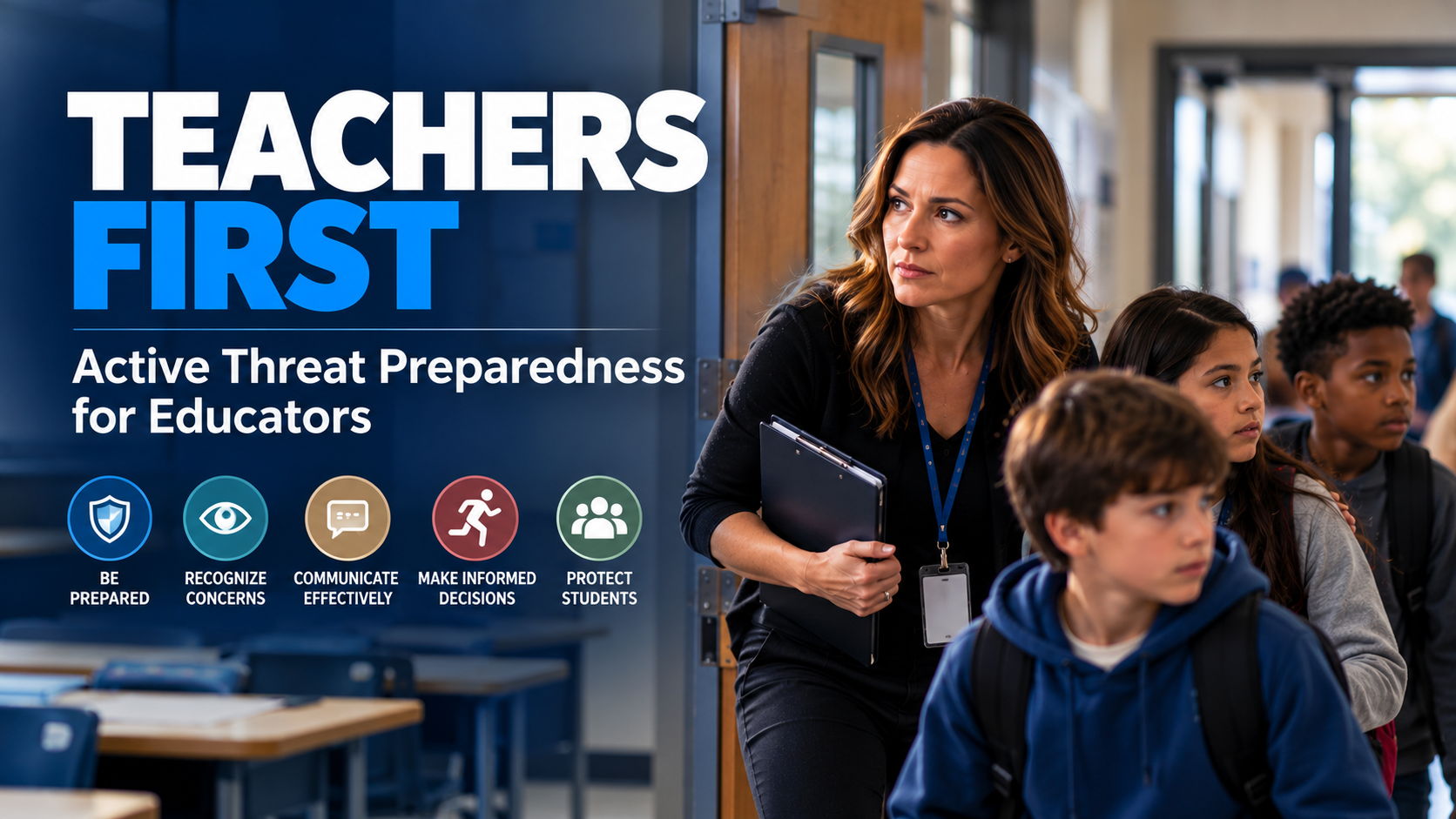
Schools need more than an emergency plan on paper. Educators need opportunities to prepare for difficult situations before they occur.
TEACHERS FIRST was developed to help school staff think beyond the basics of Run, Hide, Fight and consider the decisions, responsibilities, and challenges they may face during an active threat.
The purpose is simple: help educators become better prepared to respond thoughtfully under pressure and understand their role in protecting students.
WHAT YOU’LL LEARN
Preparation and Awareness: Develop situational awareness, understand school vulnerabilities, and recognize behaviors or conditions that warrant attention.
Emergency Communications: Understand communication procedures, handheld radio use, and how to contact 911.
Classroom Preparedness: Explore classroom setup, access control, staff positioning, and available protective features.
Response Options: Examine Run, Hide, Fight and the factors that may influence decisions during an emergency.
Accountability and Recovery: Understand staff responsibilities following an incident, including accountability, communication, and recovery considerations.
EXPLORE THE CURRICULUM
TEACHERS FIRST is a comprehensive active threat preparedness course available through the School Preparedness Network (SPN) on the Skool platform. Accessible from a computer, tablet, or mobile device through the Skool website or app, the course features 34 instructional videos across five training sections covering preparation, situational awareness, emergency communications, Run, Hide, Fight, accountability, and recovery.
Participants complete a 50-question final assessment and must score 76% or higher to earn a Certificate of Completion.
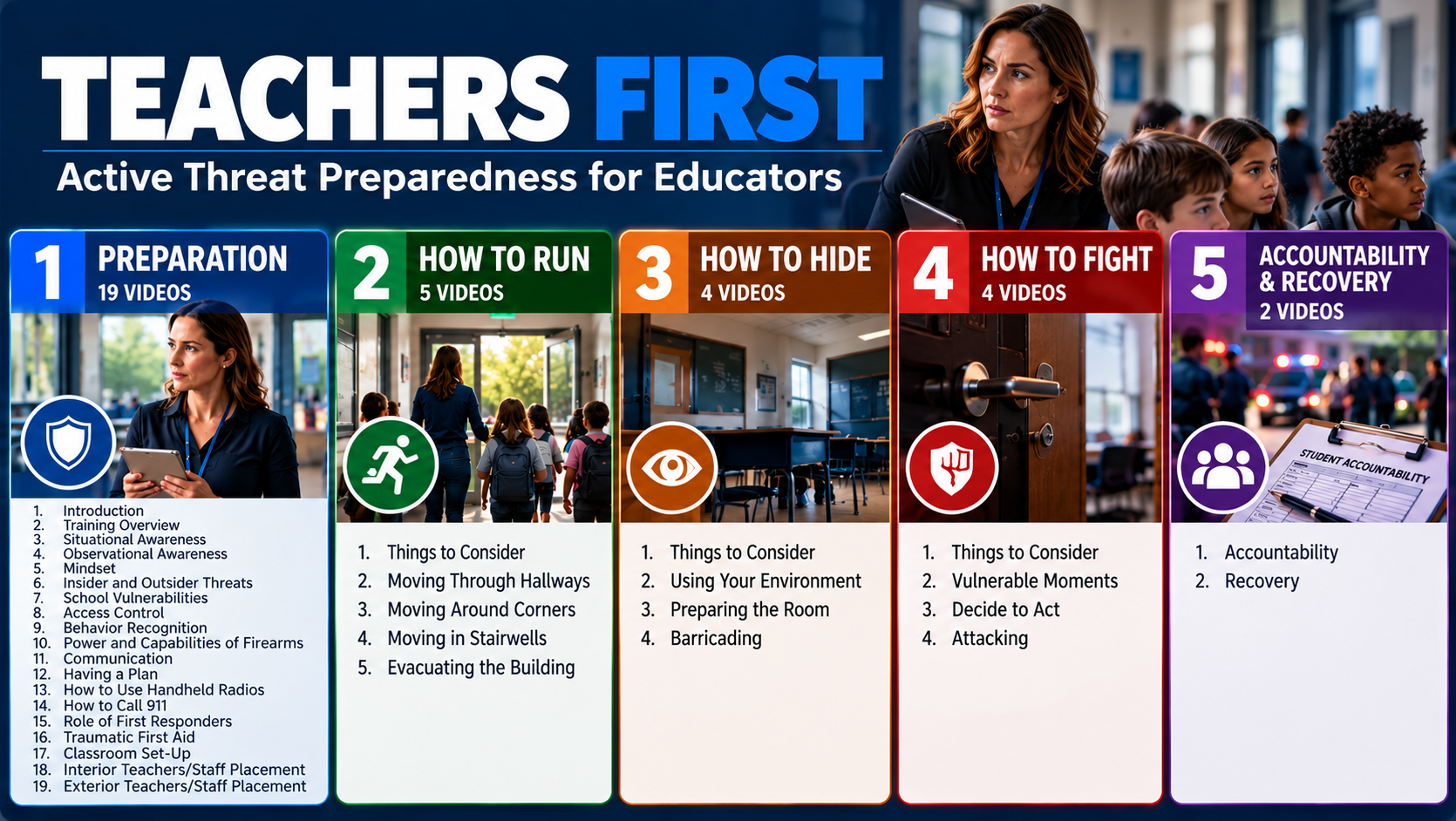
TEACHERS FIRST COURSE OVERVIEW
Get a preview of TEACHERS FIRST through short clips from the training series. This video offers a glimpse into the course structure, instructional style, and key topics covered across the five training sections.
FREQUENTLY ASKED QUESTIONS
-
TEACHERS FIRST is a video-based training program that teaches school staff how to respond to an active shooter situation using a practical, step-by-step approach. It stands for Focused Individual Response Survival Training and is designed to empower teachers and staff to act confidently and decisively in a crisis — even before help arrives.
-
TEACHERS FIRST goes beyond simply explaining Run, Hide, Fight. The course begins with preparation, covering situational and observational awareness, recognizing potential threats and school vulnerabilities, access control, emergency communications, classroom preparation, and the role of first responders.
Unlike trainings that introduce Run, Hide, Fight but leave educators with vague guidance, TEACHERS FIRST breaks each response option into practical considerations and actionable guidance. Through dedicated lessons on running, hiding, and fighting, educators learn to evaluate their surroundings, weigh their options, and make informed decisions while considering the safety and needs of the students in their care.
The course also covers student accountability and recovery after an incident. With 34 instructional videos across five sections, TEACHERS FIRST provides practical training that addresses the full process—from preparation and response to accountability and recovery.
-
This course is for any adult working in a school environment — teachers, aides, office staff, administrators, and custodians. Active shooter situations don’t discriminate by role, and TEACHERS FIRST ensures every adult knows how to respond effectively, whether they’re in a classroom, cafeteria, or hallway.
-
Absolutely. TEACHERS FIRST is an ideal onboarding tool. Since it’s online and self-paced, substitutes and new hires can complete it before they ever step foot on campus — ensuring everyone is trained and on the same page from day one.
-
Yes. TEACHERS FIRST is built around core principles like Run, Hide, Fight, but it goes further by providing actionable training tailored to real school environments. It supports compliance with many state and district safety requirements — and by standardizing staff response, it improves coordination with law enforcement during critical incidents.
-
Definitely. TEACHERS FIRST is designed to complement — not replace — existing emergency plans and drills. It gives staff the individual confidence and tactical knowledge that drills alone often lack, helping them make life-saving decisions if a real threat occurs.
-
The videos can range from 2 minutes to 10 minutes in length.
-
TEACHERS FIRST is hosted on Skool, an online learning and community platform, through the School Preparedness Network (SPN).
You can access SPN from a computer, tablet, or smartphone through a web browser. The Skool app is also available through the Apple App Store for iOS and Google Play for Android.
Once enrolled, staff can complete the training online at their convenience.